
Flat roofs before winter: what to check on a Montréal flat roof
By Pantelis Ambatzis, CMI® · November 26, 2026
Late fall is when I get the most questions about flat roofs. Buyers want to know if the roof on the plex they're buying will make it through the winter, and owners want to know what to do before the first big snowfall. A flat roof is not complicated, but it doesn't forgive much: water has to get to the drain, and every seam and opening has to stay sealed. Here is how I look at one.
What it is
A flat roof isn't really flat. It has a slight slope that sends water toward one or more drains, usually in the middle of the roof, and the water goes down a pipe inside the building instead of into gutters. The roof is covered with a membrane: on older roofs, layers of felt and tar with gravel on top (asphalt and gravel); on most newer ones, a two-ply modified bitumen membrane, often called elastomeric, with a granule surface. Around the edges there are usually parapets, the low walls with a metal cap on top.
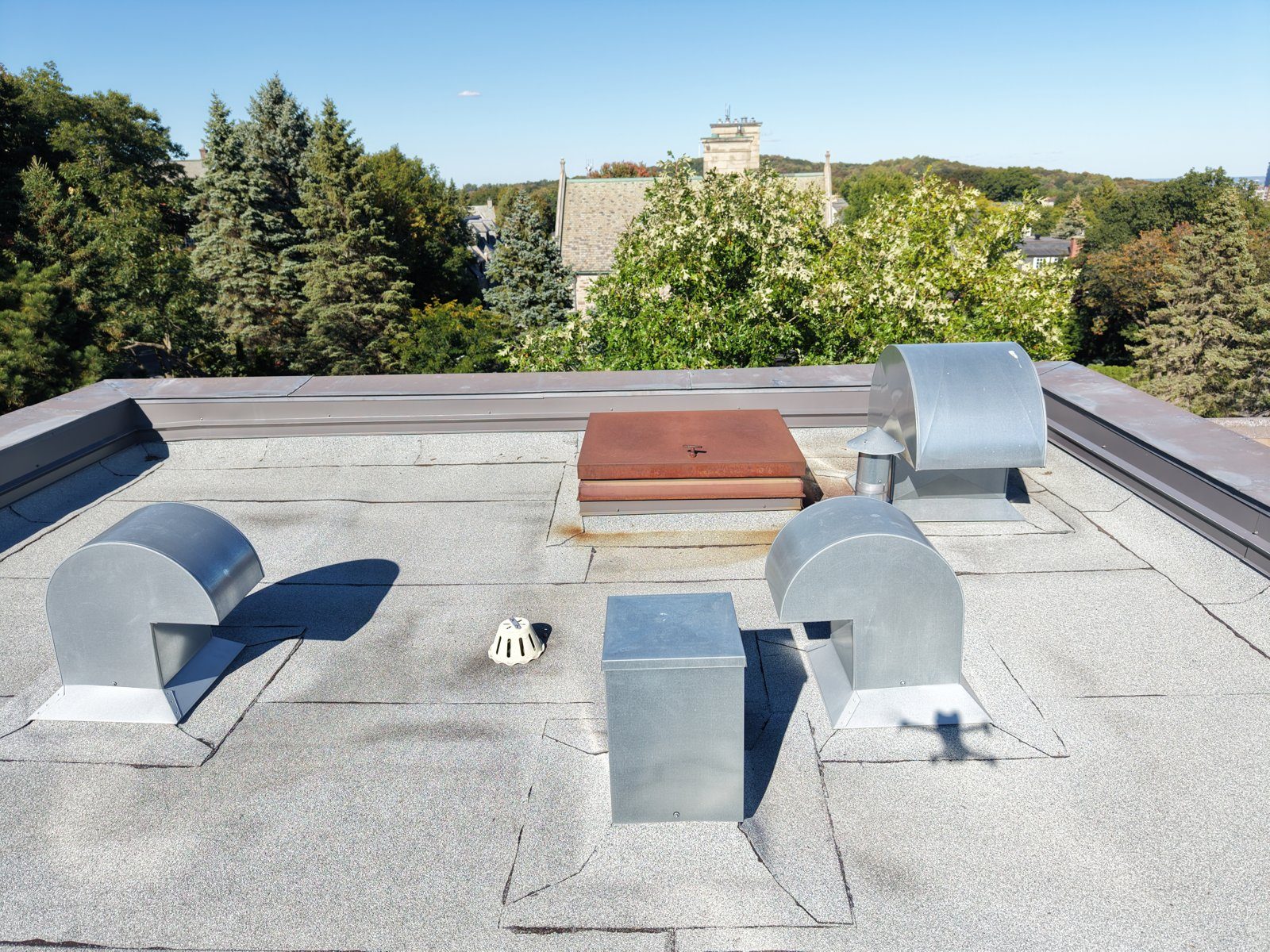
How it shows up in Montréal houses
Most duplexes and triplexes from the early 1900s to the 1970s have flat roofs, and so do many row houses, small apartment buildings and newer condo buildings. Many have been redone more than once, and it is common to find a newer membrane over an older one, or patches of different ages on the same roof. In a plex or a condo building, one roof covers everyone, so its condition matters to every unit.
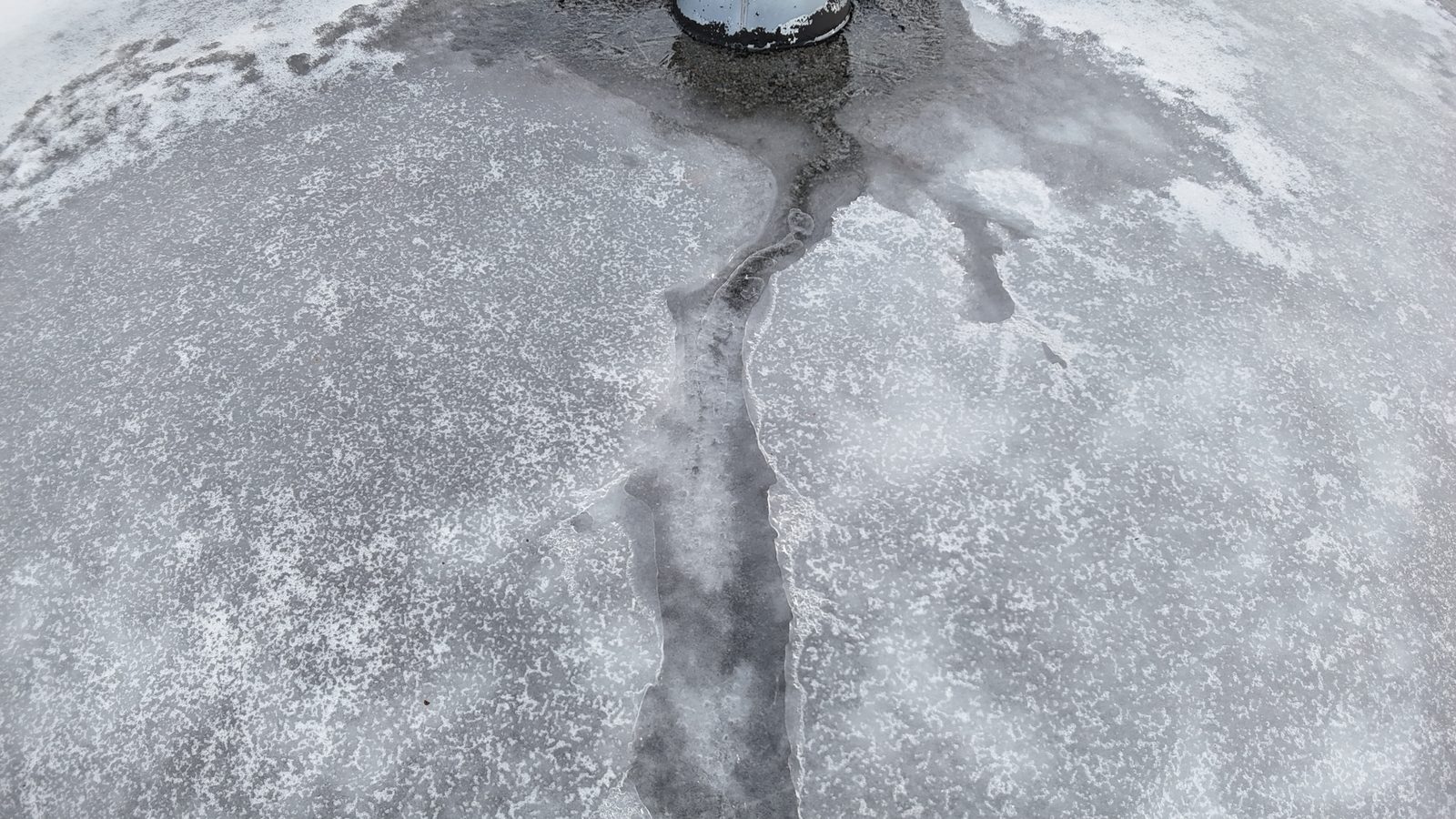
Winter is hard on them. Snow sits on the roof for months, water that can't reach the drain freezes, and the freeze-thaw cycles in March and April work on every weak seam. A drain blocked by leaves in November can mean a pond of ice in January and a leak on the top floor when it melts.
What I check during the inspection
When the roof is safely accessible I look at it up close; otherwise I fly the drone over it. I look at the membrane for blisters, cracks, bare spots, open seams and old patches, and for dirt rings or stains that show where water sits after a rain. I check the drains and their strainers, the flashing around every vent, chimney, hatch and skylight, and the parapets: the metal caps, their joints, and the masonry under them.
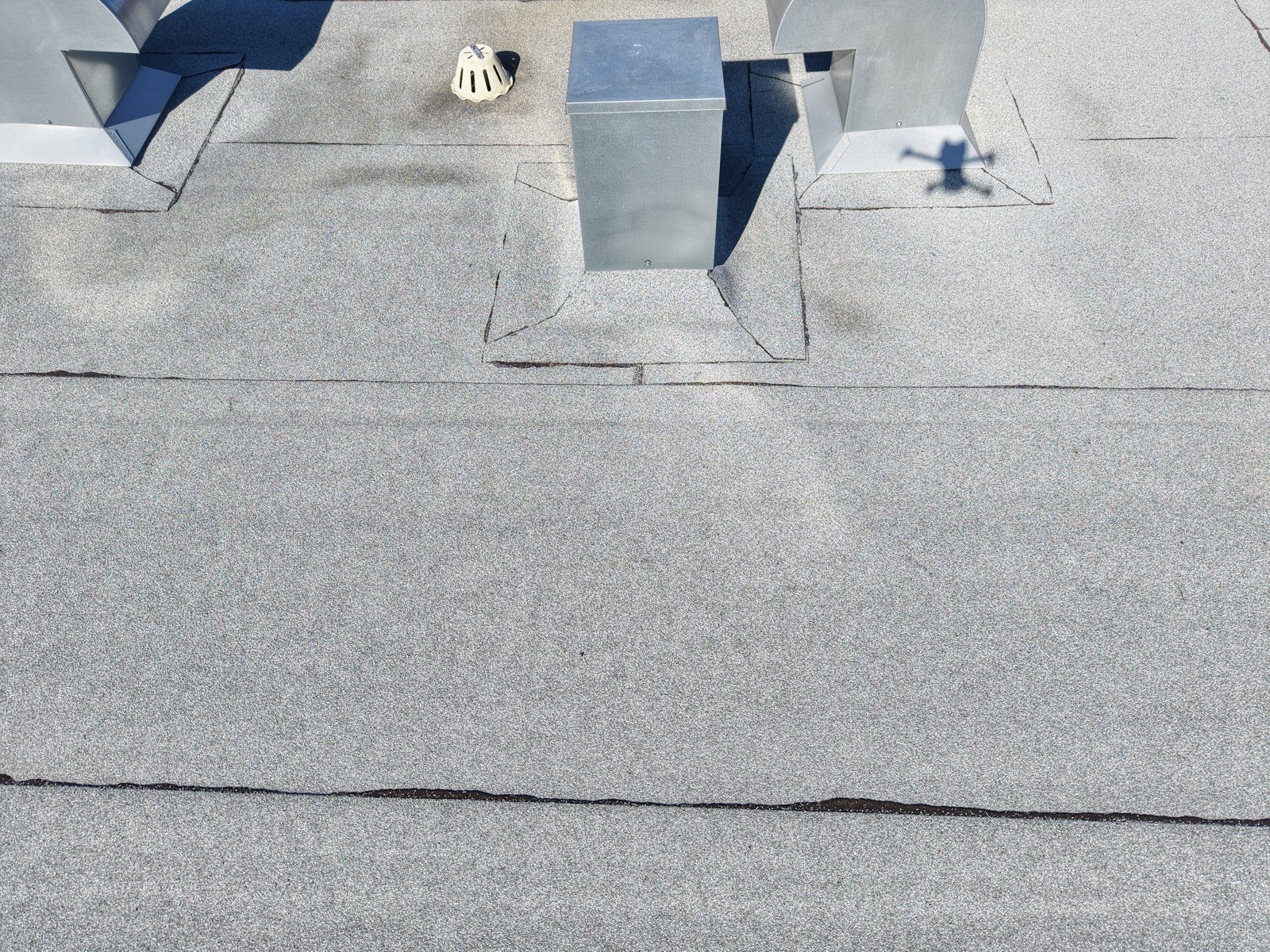
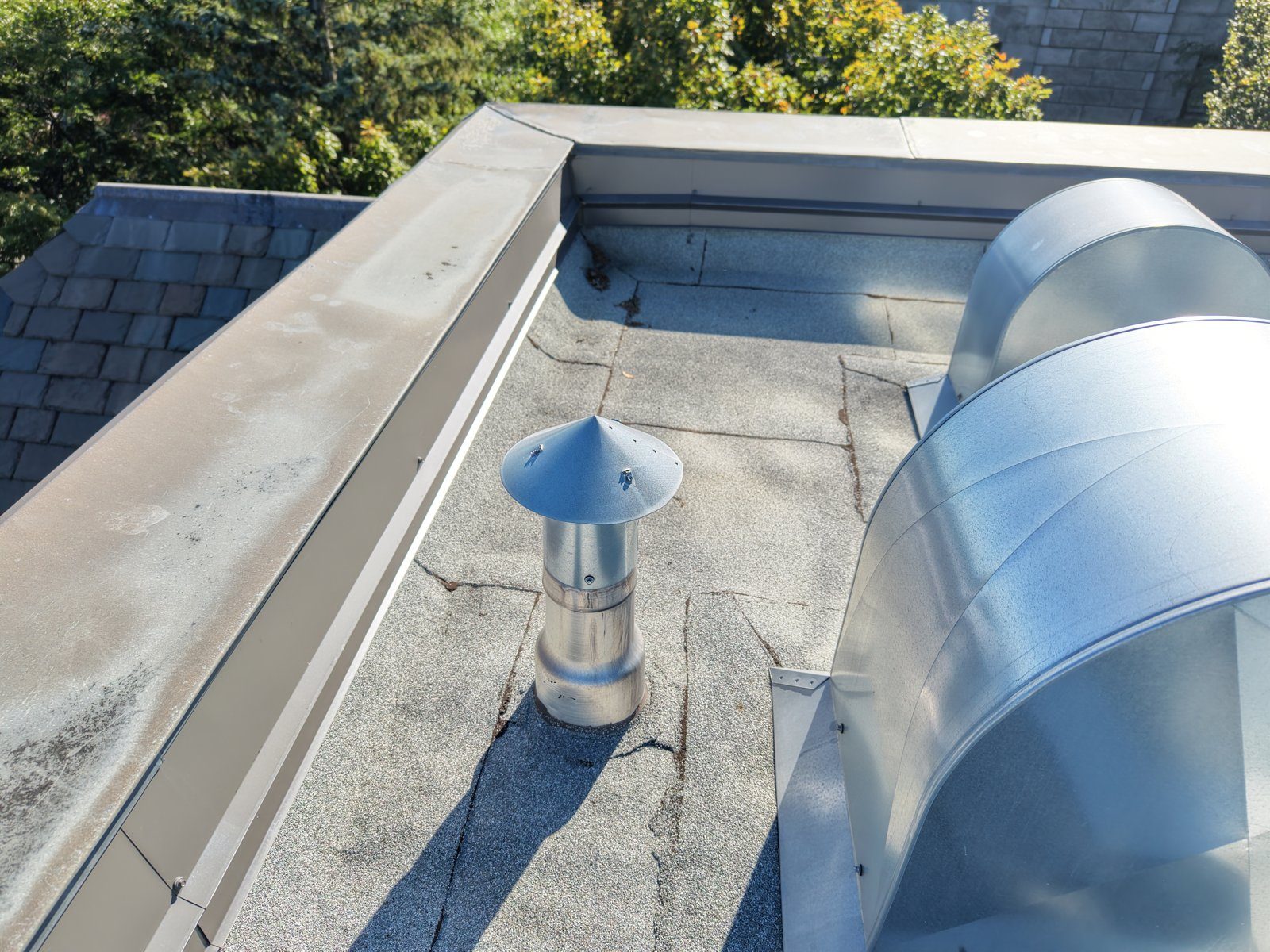
Then I go inside. On the top floor I look at the ceilings, especially near the drain and along the outside walls, and I use a moisture meter and the thermal camera to look for wet or missing insulation. If there is access to the space under the roof, I look for stains, rot and frost. The inspection is visual: I don't cut the membrane or test for leaks, and once the snow is down, part of the roof can't be seen. When that happens, the report says so.
What it means for you as a buyer
A worn flat roof is one of the bigger costs you can inherit with a plex, so you want to know its age and condition before you remove your inspection condition. The seller's declaration should say when the roof was redone; ask for the roofer's invoice and any warranty, and check whether the warranty can be transferred to you. How many years are left depends on the type of membrane, the quality of the work and the maintenance, and roofers don't always agree, so the invoice date is often the best clue. In a condo, ask the syndicate when the roof was last redone and what the contingency fund plans for it.
What to do next
Before winter, have the drains and corners cleared of leaves, and have a roofer look at any blister, open seam or loose cap. Don't let anyone attack the membrane with a metal shovel; if snow has to come off, hire someone who does it for a living. After the first thaw, look at your top-floor ceilings. If you are buying in winter and the roof was under snow, think about having it looked at again in the spring, once the snow is gone.
You can read more on the roof inspection page and the duplex and plex inspection page. The roof is part of every pre-purchase inspection, with drone photos in a written BNQ 3009-500 report.
Buying a plex or a house with a flat roof? Call 514-924-8887.
Like this kind of practical advice? Add MTL Home Inspection as a preferred source on Google: