
Roof, foundation, electrical, thermal: four things I look at closely on every Montréal inspection
By Pantelis Ambatzis, CMI® · September 23, 2026
People often ask me what I actually look at during a pre-purchase inspection. The honest answer is: everything I can safely see and reach, following the BNQ 3009-500 standard I use for every inspection in Québec. But there are four areas where I slow down on every single house, because that is where the expensive surprises usually hide. Here they are, with photos from my own recent inspections.
1. The roof
The roof is the first line of defence against water, and in Montréal it takes snow, ice and freeze-thaw every year. On asphalt shingles I look at the granules, the tabs, the flashing around chimneys and vents, and anything that sits on or over the roof, like branches. When a roof is too steep, too high or too fragile to walk safely, I fly the drone over it so you can see it up close in the report.
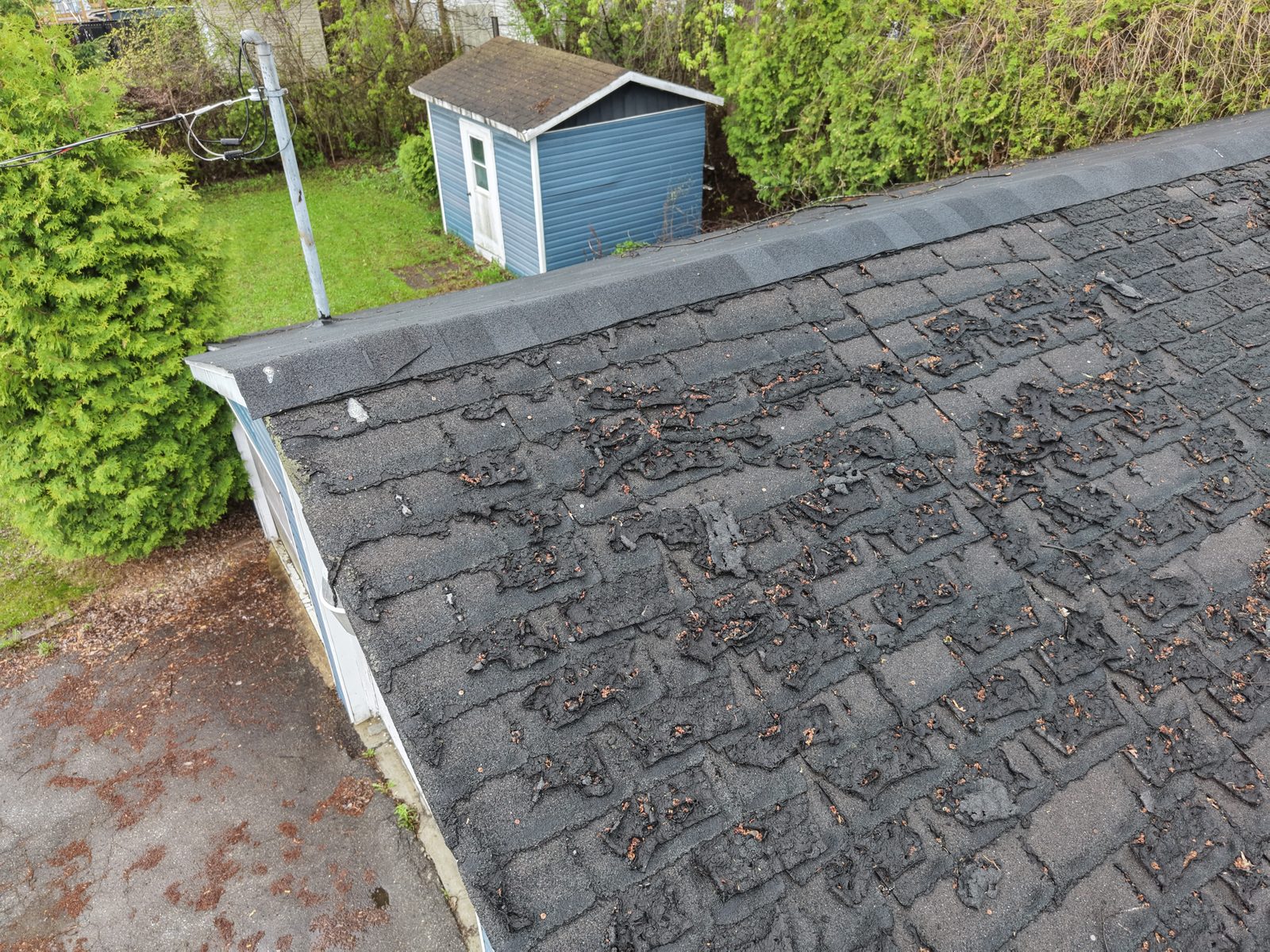
What it means for you: a roof like this is not a detail, it is a replacement to plan for. I can't tell you the price, but I can tell you it should be in your budget and in your discussion with the seller before you remove the inspection condition.
2. The foundation and the parging
A lot of Montréal-area houses from the post-war years have a poured concrete foundation covered with a cement coating, the parging. Parging cracks and falls off with time, and that alone is mostly cosmetic. What I want to know is what is behind it: is there a crack in the concrete itself, is it active, is water getting in, and is the ground sloping toward the house or away from it?
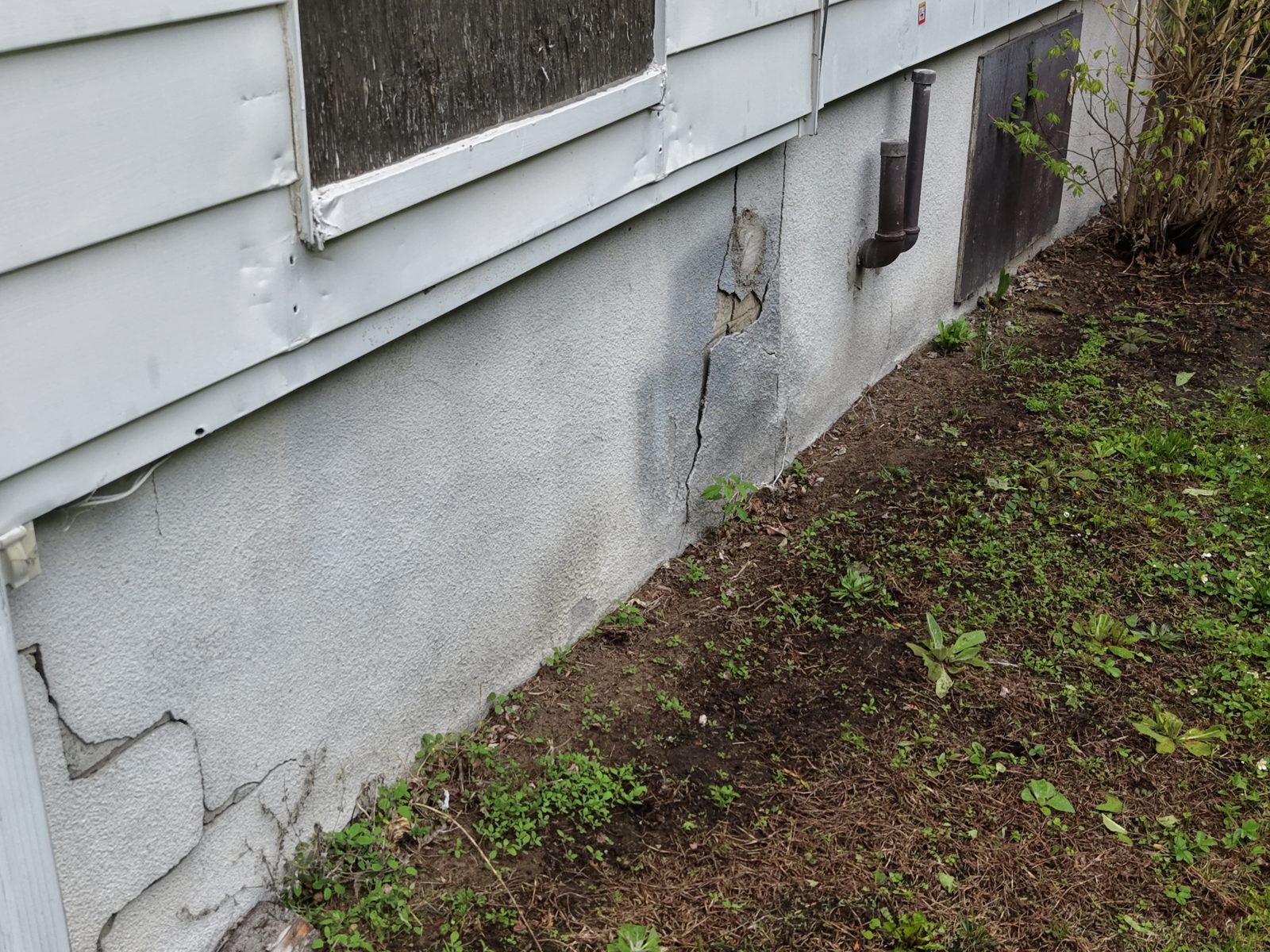
I always check the same spot from the inside, with a moisture meter when the wall is finished. A crack that lines up with a damp or stained area inside gets a clear recommendation to have it evaluated by a foundation specialist. A dry, stable hairline crack gets a note to monitor it and keep the parging in good shape.
3. The electrical entrance
Before I ever open a panel, I look at how the power gets into the house. On older Montréal plexes and houses, the service often comes in overhead: the utility wires, the masts, the weatherheads at the top and the brackets that hold everything to the wall. I check that the masts are straight and well fastened, that the weatherheads are intact, and that nothing is pulling on the masonry.
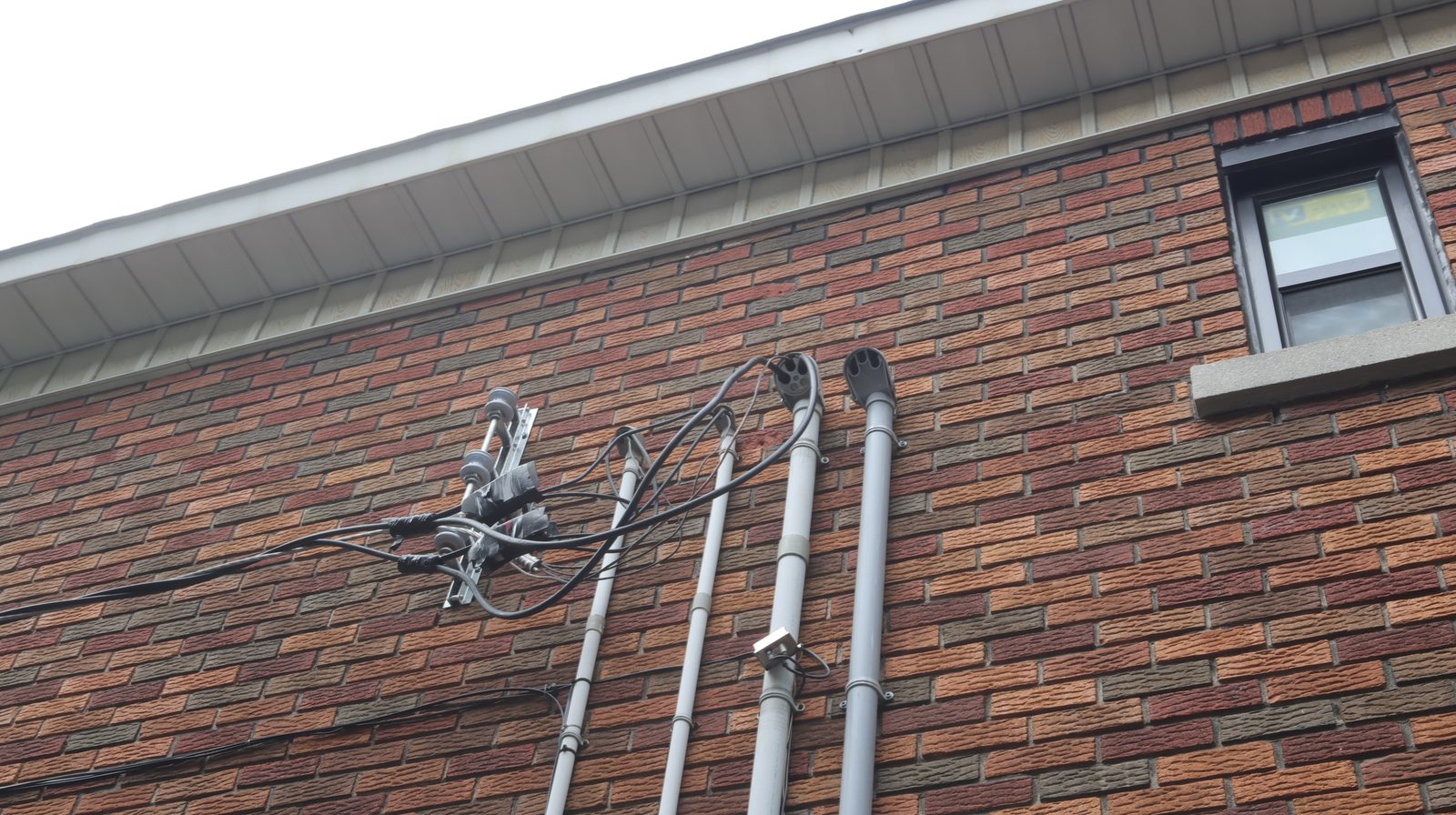
Inside, I open the main panel when it is safe to do so and look for overheating, double-tapped breakers, mixed or undersized wiring and older equipment that insurers ask about. If something needs work, the recommendation is simple: a licensed master electrician, as required by the Régie du bâtiment du Québec.
4. Thermal imaging
A thermal camera does not see through walls, and it does not see water. It sees temperature differences on the surface. That is still very useful, because missing insulation, air leaks and wet materials all show up as a spot that is warmer or cooler than the area around it.
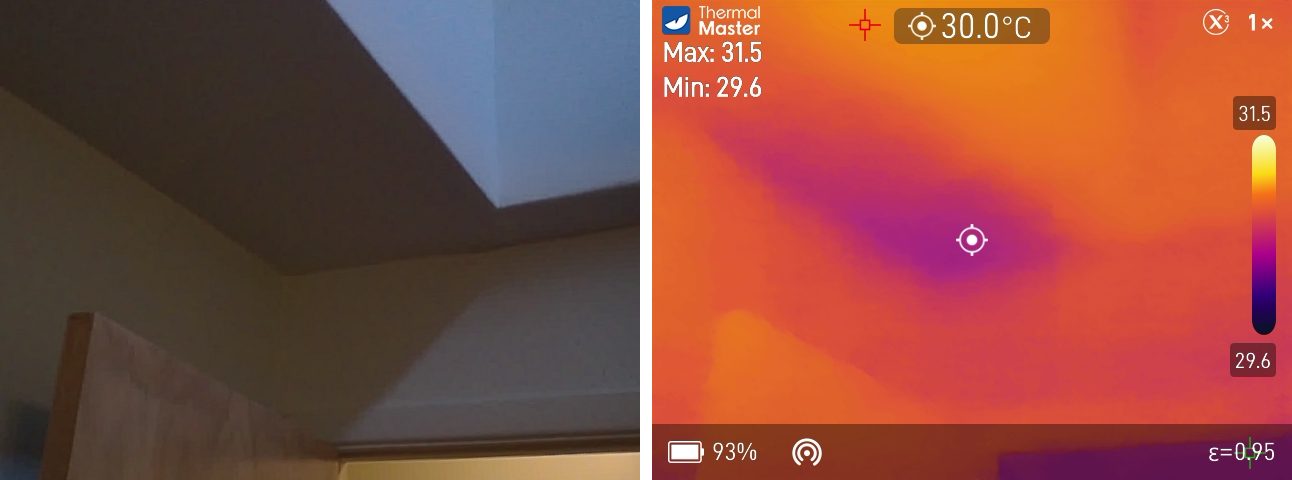
The camera tells me where to look; the moisture meter and my own eyes tell me what it is. Around skylights and under flat roofs, it saves a lot of guesswork.
What to do next
None of these four things should scare you away from a house by themselves. The goal is to know what you are buying before the inspection condition in your promise to purchase runs out, so you and your broker can decide what to do: go ahead, negotiate, or ask for more information from a specialist. I walk you through every finding on site, in plain language, and the written pre-purchase inspection report follows with the photos. If you want to go deeper on one area, see the roof, electrical and thermal imaging pages.
Buying in Montréal, Laval or the West Island? Call 514-924-8887.