
Sample Inspection Report
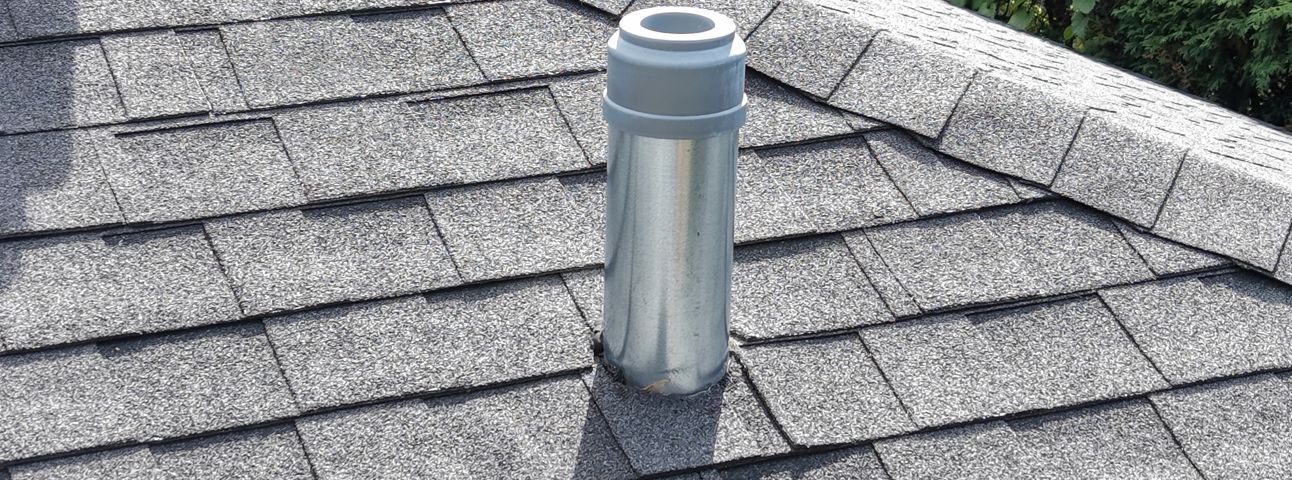
This is what you get after an inspection. The house in this sample is fictional, but every finding, photo and explanation comes from a real MTL Home Inspection report, with nothing that identifies the property or the client. You can download the full sample report (PDF) or read five findings below, the way they appear in the report.
How each finding is written
I write each finding the way I explain it to you on site, so someone who was not at the inspection understands it from the report alone:
- What it is: the component, with any technical word explained in plain language;
- What I saw: where, how much, and what the moisture meter, thermal camera or tester showed;
- Why it happens and why it matters: the likely cause and what it leads to if it is left alone;
- What to do, who and when: the correction, the licensed trade (RBQ, CMEQ, CMMTQ), and whether to price it before your decision or plan it after the purchase;
- A photo with a red outline on the exact spot, a drawing under the finding that shows the principle or the correct installation, and "Learn more" links to sources like CAA-Québec, Health Canada and InterNACHI.
Every finding also carries its category from the BNQ 3009-500 standard (apparent defect, sign of deficiency, risk to safety) and a priority: safety, repair or monitor.
Five findings from the sample
Missing flashing at the roof ventilators (repair)
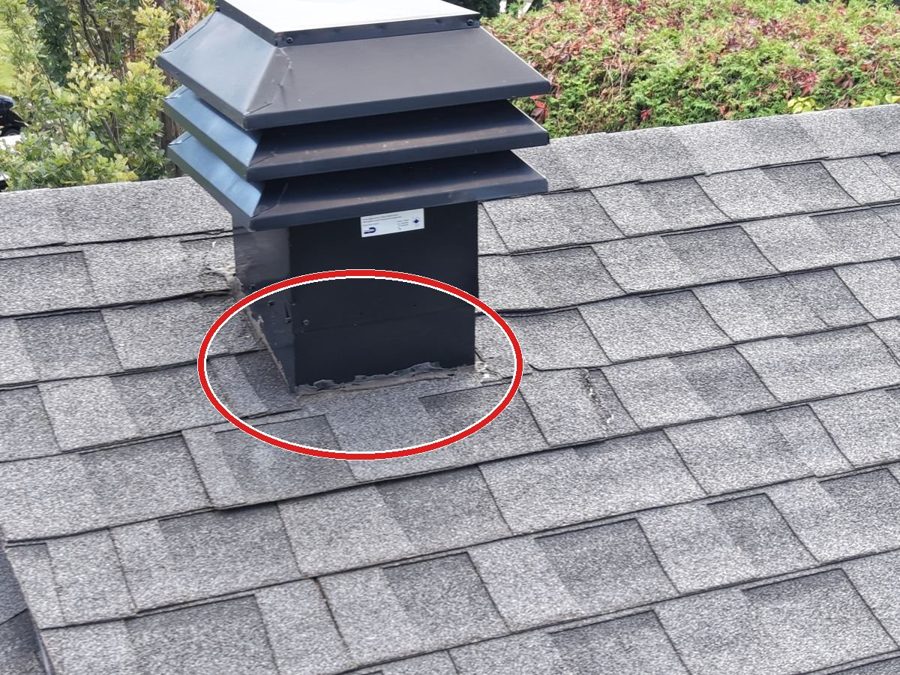
Flashing is the metal or rubber collar that seals the joint between the roof and anything that passes through it. Here it is missing at the base of the roof ventilators and plumbing vents, and some shingles around them are lifting. Rain and melting snow run along the penetration and into the attic. That is where the water and mould in the attic come from, so this is fixed first, by a roofer with an RBQ licence, before any attic work. To price before making your decision.
Attic: water and mould on the roof structure (repair)
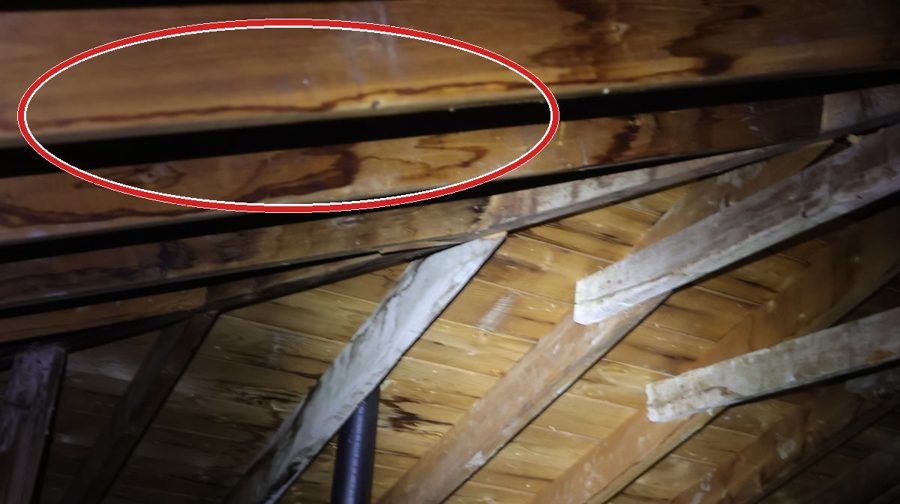
Water from the roof has wetted the wood. An instant mould test on the wood turned almost black, which means a high concentration of surface mould. The fix is one project: roof flashing first, then decontamination by a firm working to BNQ 3009-600, with the insulation and vapour barrier redone at the same time. The seller declared no mould; the report shows where the declaration and the house disagree. To price before making your decision.
Hairline crack in the foundation (repair)
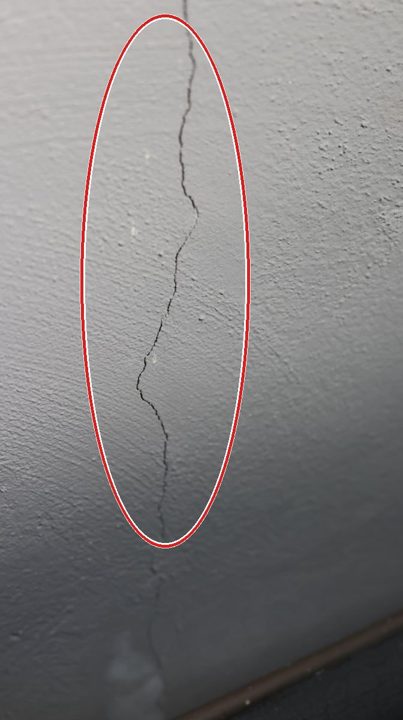
Hairline cracks are common in 1960s concrete foundations; what matters is whether water gets in and whether they grow. Here the ground slopes toward the house and the downspouts are short, so water is sent right to the cracks. Recommendation: injection from the inside by a foundation contractor (RBQ), and correct the grading and downspouts so the repair lasts.
Cold band at the ceiling, found with the thermal camera (repair)
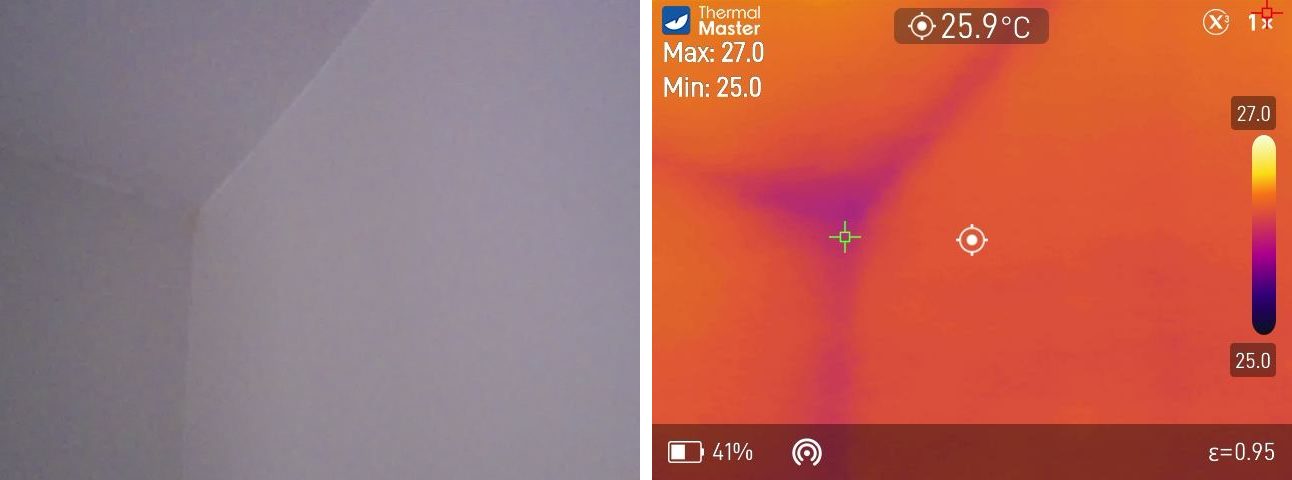
The thermal image shows a cooler band where the ceiling meets the wall, a sign of thin or disturbed insulation above. Warm, humid air from the house leaks into the cold attic there and condenses on the roof boards in winter. The report explains it, shows both images side by side, and groups it with the attic work.
Open junction box in the basement (safety)
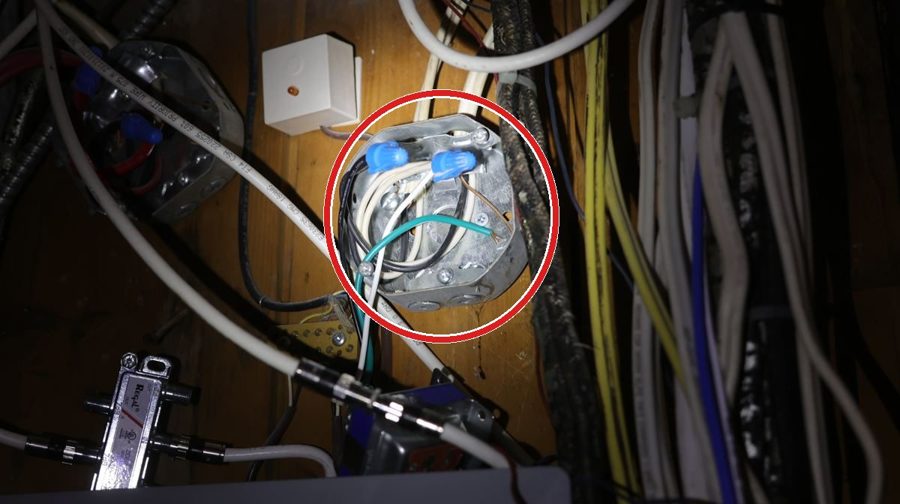
Every wire connection must be inside a closed box, so live wires cannot be touched and a spark stays contained. Recommendation: install the cover and check the connections (master electrician, CMEQ), without delay.
What else is in the report
- A letter and a summary that start with what could influence your decision, then list every item by priority;
- A seller's declaration table comparing what the seller declared with what I observed;
- An action plan by trade, so one roofer, electrician or plumber visit covers several items;
- The photo appendix, the documents reviewed and the limits of the inspection.
Reports are in English or French, written to the BNQ 3009-500 standard, often delivered the same day. A full report is usually 40 to 60 pages; this sample keeps 15 findings.
Download the sample report (PDF)
Want a report like this for your next home? Call 514-924-8887 for a same-day quote, or see the pre-purchase home inspection page.